-
Events 27
Events 27
- Other products 27
26.27 SEASON
-
The archipelago of desire
![]()
The foyerLille Opera
The archipelago of desire
Brenda Poupard, Kaoli Ono
Thursday, 22 October 2026 18:00
The foyerLille Opera
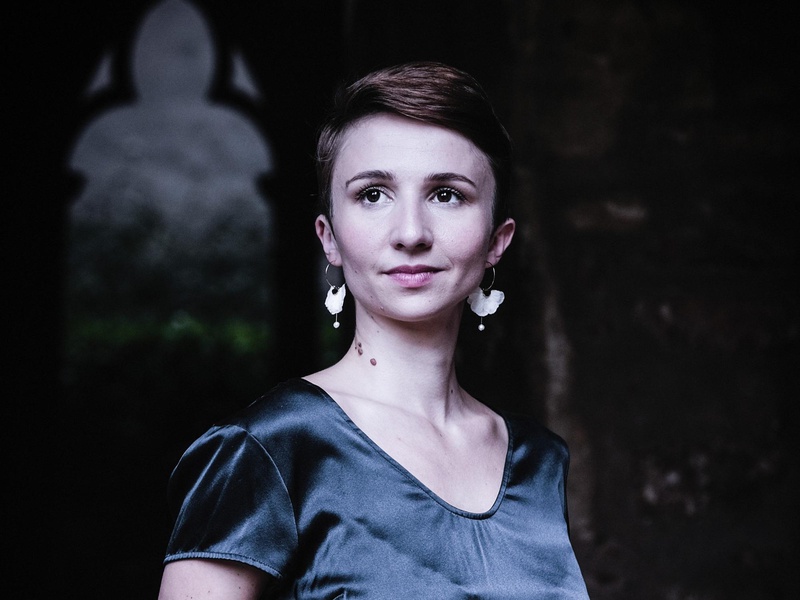
The Songs of Bilitis inspired not only Claude Debussy, but also the Breton composer Rita Strohl. Brenda Poupard, heard last season in Bluebeard's Castle, places these songs alongside melodies by Augusta Holmès, herself both composer and poet. In their respective song cycles, Strohl and Holmès explore the many faces of desire: complicity, attachment, intoxication, but also obsession and sorrow, leading to the vertigo of disappearance. By giving unflinching expression to the violence that can arise within a relationship, as well as to the forms of resistance it provokes, they reveal how two beings may love each other passionately while also causing one another harm.
As a contemporary counterpoint, pianist and composer Kaoli Ono presents her Five Wakas. In this work, she sets to music the love poems of a 9th-century geisha who, within the miniature form of the waka, describes a night spent waiting for her lover.
Kaoli Ono
Five Wakas (2015)
Augusta Holmès
Excerpts from the cycles Les Sept Ivresses (1882)
and Les Heures (1900)Pauline Viardot
Songs (second half of the 19th century)
Rita Strohl
Excerpts from Bilitis (1898)
Claude Debussy
Les sons et les parfums tournent dans l’air du soir (1910)
Trois Chansons de Bilitis: “La Flûte de Pan” (1897–1898)Performed by
Brenda Poupard, mezzo-soprano
Kaoli Ono, piano -
One Night to Change Everything
![]()
Main AuditoriumLille Opera
Tana Quartet
Wednesday, 4 November 2026 20:00
Main AuditoriumLille Opera
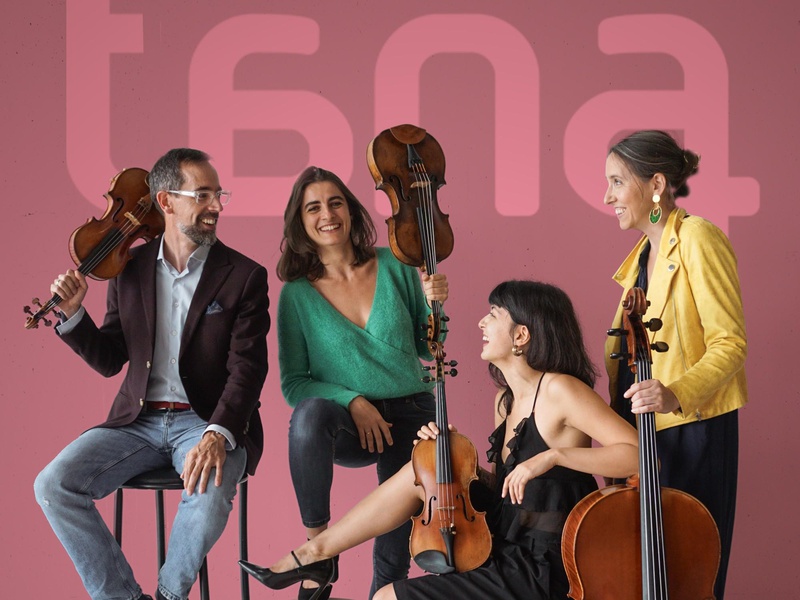
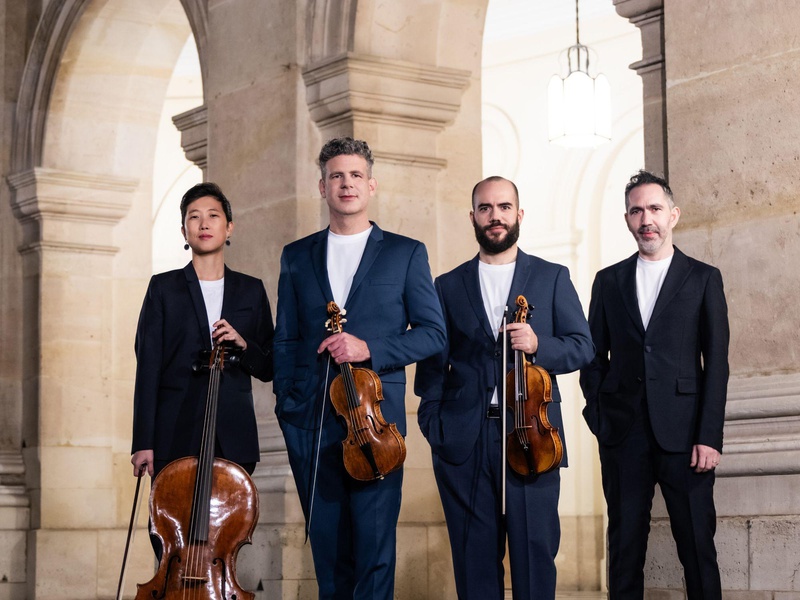
In the gentle glow of moonlight, a woman confesses to her new lover that she’s pregnant with another man’s baby, having experimented with her sensuality before their meeting. The lover is remarkably forgiving: out of love for her, he will raise the child as his own. Moved by the modernity and metaphysical power of Richard Dehmel’s poem, Arnold Schönberg set it to music in Transfigured Night. A century later, composer Patricia Alessandrini elected to explore the role of this generous man who ‘absolves’ the woman of her supposed transgression. Her reinterpretation of the romantic score endows both sexes with the power to transfigure.
Feminine desire, though condemned by society for centuries, has consistently fascinated artists, like Claude Debussy, who liked to embody through his music the imagined sensuality of women living an ‘exotic’ life. His celebrated String Quartet in G minor completes the Tana Quartet’s programme. One of the internationally recognised quartet’s strengths — their ability to foster dialogue between different works and periods to reveal new resonances — is on clear display in this performance.
Tana Quartet
With Garth Knox, viola, and Marie Hallynck, cello, for the sextetRunning time: approx. 1 hr. 20 min. (no interval)
-
Concert insomniaque - 1ère partie
![]()
The foyerLille Opera
Concert insomniaque - 1ère partie
Compagnie La Tempête
Saturday, 7 November 2026 21:00
The foyerLille Opera
For the soundtrack of the film A Clockwork Orange, Wendy Carlos transformed Henry Purcell’s Music for the Funeral of Queen Mary into a futuristic sonic vision using synthesizers. This passage from one universe to another serves as the acoustic compass for La Tempête in this Insomniac concert. Time and again, the music moves between eras and imaginaries separated by centuries. Within this space liberated from chronology, connections emerge between the works, and at times the musical thought of one age is revealed through the sonic means of another.
Henry Purcell
Music for the Funeral of Queen Mary (1695)
Hear my prayer, O Lord (c. 1680)
O, I’m sick of life (c. 1680)Philippe Hersant
Falling Star, for eight mixed voices and viola da gamba (2005)
John Taverner
Missa Gloria tibi Trinitas: Sanctus – Benedictus (c. 1520)
John Bull, John Blitheman, Christopher Tye, John Taverner
Variations on In nomine (16th century)
Arvo Pärt
The Deer’s Cry (2007)
Summa (1977)Thomas Tallis
Miserere nostri, for seven voices (before 1575)
Duration: 1 hour
-
Concert insomniaque - 2nde partie
![]()
The foyerLille Opera
Compagnie La Tempête
Saturday, 7 November 2026 22:30
The foyerLille Opera
For the soundtrack of the film A Clockwork Orange, Wendy Carlos transformed Henry Purcell’s Music for the Funeral of Queen Mary into a futuristic sonic vision using synthesizers. This passage from one universe to another serves as the acoustic compass for La Tempête in this Insomniac concert. Time and again, the music moves between eras and imaginaries separated by centuries. Within this space liberated from chronology, connections emerge between the works, and at times the musical thought of one age is revealed through the sonic means of another.
Steve Reich
Proverb (1995)
Piano Phase (1967),
version pour vibraphone
Pérotin
Viderunt omnes,
organum à quatre voix (vers 1200)
Anonyme, attribué à Pérotin
Deus misertus hominis (13e siècle)
Fredrik Zeller
PeroPop Sederunt (2003)
Giacinto Scelsi
Tre pezzi per sassofono soprano
o tenore : I & III (1956)
Morton Feldman
Chorus and Instruments II (1967)
Gavin Bryars
Extra Time (2018)
Toshio Hosokawa
Three Love Songs : « Firefly » (2006)
Per Nørgård
Morgen-meditation (2002)Duration: 1 hour
-
Concert insomniaque - 3ème partie
![]()
The foyerLille Opera
Compagnie La Tempête
Saturday, 7 November 2026 23:59
The foyerLille Opera
For the soundtrack of the film A Clockwork Orange, Wendy Carlos transformed Henry Purcell’s Music for the Funeral of Queen Mary into a futuristic sonic vision using synthesizers. This passage from one universe to another serves as the acoustic compass for La Tempête in this Insomniac concert. Time and again, the music moves between eras and imaginaries separated by centuries. Within this space liberated from chronology, connections emerge between the works, and at times the musical thought of one age is revealed through the sonic means of another.
Long before daybreak, DJs Arandel and Camille Rhonat will explore, in the third chapter of this nocturnal journey, the musical thought of early music through synthetic sound worlds — much in the spirit of Wendy Carlos. Their concert pays tribute to this openly transgender composer, a pioneer of electronic music, and to her experiments with the Moog synthesizer.
Tribute to Wendy Carlos
by DJs Arandel and Camille Rhonat
Duration: 1 hour
-
Myths in metamorphosis - 2
![]()
The foyerLille Opera
Myths in metamorphosis - 2
Debussy, Szymanowski
Tuesday, 10 November 2026 13:00
The foyerLille Opera
Claude Debussy and Karol Szymanowski composed, only a few years apart, two masterpieces of instrumental music inspired by Greek mythology. Yet their musical worlds are far removed from one another: Szymanowski, a Polish composer born in what is now Ukraine, still belongs to the great Romantic tradition of virtuosity, while Debussy tirelessly sought a music of suggestion, timbre, and ambiguity — that music “between the notes.”
Claude Debussy
Prélude à “L’après-midi d’un faune” (1894),
transcription for piano by Jean-Michel Dayez
Six Épigraphes antiques,
for piano four hands (1914–15)Karol Szymanowski
Myths, Op. 30, for violin and piano (1915)
Performed by
Wibert Aerts, violin
Jean-Michel Dayez, piano
Thibaut Pruvot, piano -
Androgynous
![]()
Main AuditoriumLille Opera
Androgynous
Portrait of a Naked Dancer
from Friday, 13 November 2026 to Saturday, 14 November 2026
Main AuditoriumLille Opera
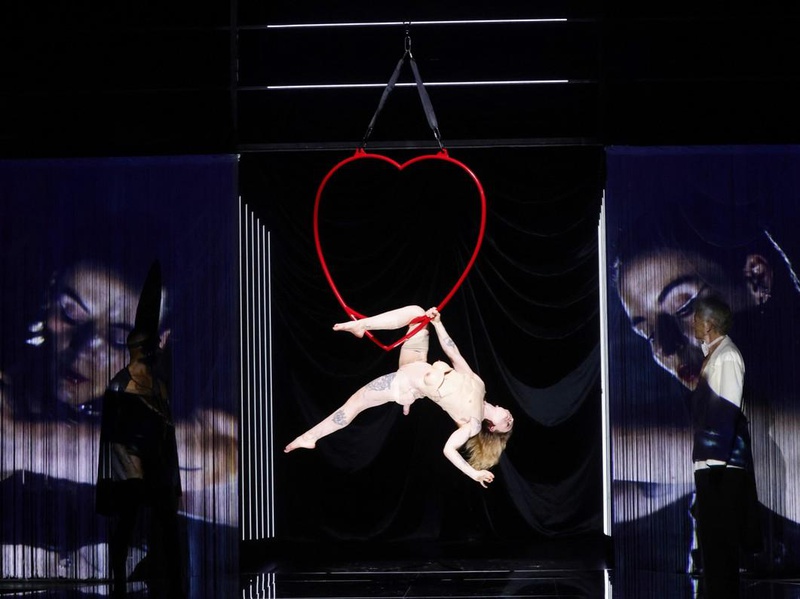
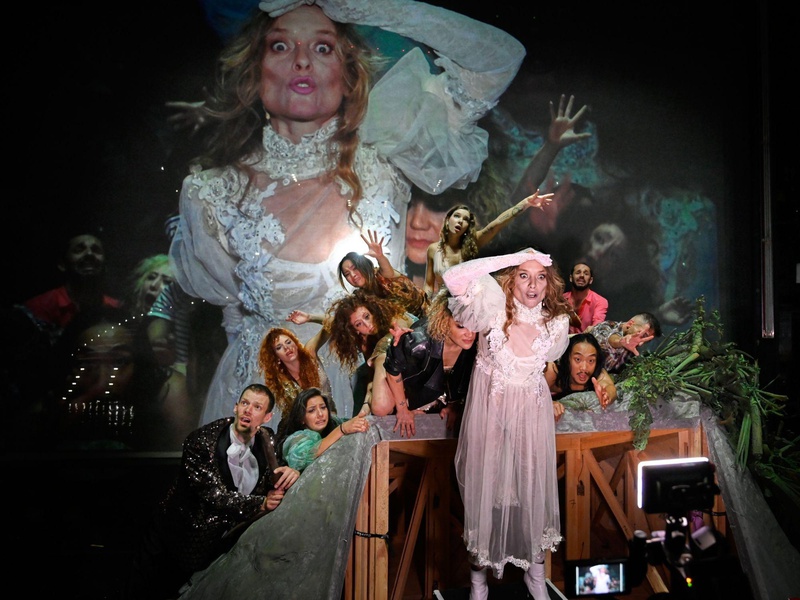
A century ago, a young woman turned a night club into an avant-garde scene and her body into a symbol of sensual resistance. Anita Berber, who died at just twenty-nine years of age, is a counter-culture icon, and probably the first woman to perform nude on stage. Her transgressive art, which blends eroticism and gender fluidity, perfectly embodies the creative fever that swept through Berlin in the 1920s. But her works were nearly completely erased by the Nazi regime. All that remains of her magnetic performances are reviews in the press and police reports, which focus exclusively on their scandalous nature.
Stage director Lola Arias collaborated with performer and pole dancer River Roux to create this bold work at the crossroads of documentary theatre and choreography. Alongside Bishop Black, a performer and porn artist, and Dieter Rita Scholl, a non-binary person in their seventies, Roux tells Anita’s life story and brings the enchanting beauty of her performances back to life. Alluding to their own personal stories, the three artists also defy taboos with their bodies at a time when the threat of censure and erasure is increasingly present.
In English and German with French and Dutch surtitles
Running time: approx. 1 hr. 45 min. (no interval) -
Tsiah thóo
![]()
Grande salleThéâtre municipal de Courtrai
au Théâtre municipal de Courtrai
Sunday, 22 November 2026 18:30
Grande salleThéâtre municipal de Courtrai
Bare Feet Dance Theatre
Alors que la crise environnementale s’intensifie, quelle approche adopter face à une nature surexploitée, et comment renouer un dialogue avec la terre ?
En mêlant musique traditionnelle taïwanaise, percussions contemporaines et sons électroniques, Tsiah thóo revisite la relation entre l’homme et la Terre par la danse. La chorégraphie évoque un rituel destiné à conjurer la peste et nous rappelle la nécessité d’établir une relation harmonieuse et durable avec l’environnement.
Dans une atmosphère apocalyptique, les interprètes imitent les différentes formes d’existence des animaux et des plantes. Les mouvements mettent en scène un corps déséquilibré pour révéler les sentiments complexes des humains envers la Terre, tandis que la musique adopte la perspective du monde naturel pour représenter l’agitation terrestre.
Danse Bare Feet Dance Theatre (Taïwan)
Orchestre Tamsui Nan-Bei Xuan (Taïwan)Dans le cadre du festival NEXT
Durée : +/- 1h
Une navette gratuite est proposée au départ de Lille,
réservation auprès de la billetterie d el'Opéra de Lille -
Chronochromatic
![]()
The foyerLille Opera
Laure M. Hiendl, John Cage
Thursday, 26 November 2026 18:00
The foyerLille Opera
Sampling existing musical material and placing it in new contexts is a common practice in pop and electronic music. But this process is also one of the familiar tools of contemprary composition. Born in 1986, Laure M. Hiendl develops his own form of musical hacking, sometimes going so far as to “recycle” ideas that the history of music seemed to have consigned to the attic or the cellar. He draws on scores from the past, now accessible within vast digital archives that constitute a sort of collective memory, and extracts fragments from them. Not to quote them, but to construct new soundscapes, like so many sentimental landscapes from another era.
In Chronochromatic Variations III, Hiendl composes using melodic fragments from a string trio by the Anglo-Irish composer Ernest John Moeran (1894-1950), who is relatively little known today. He isolates them, breaks them down and repeats them in a loop. The seemingly endless repetition of Moeran’s tonal sounds and motifs, marked by the influence of English folk music, gives the impression that time stands still. At the same time, each of the composition’s four movements evokes the melancholy of a vague memory: something very familiar that suddenly seems distant and irretrievably lost.
-
Ermonela – L’âme en feu
![]()
Main AuditoriumLille Opera
Ermonela Jaho
from Thursday, 3 December 2026 to Sunday, 6 December 2026
Main AuditoriumLille Opera
Opera is the art of extreme passion, an art that kindles in audiences emotions of a rare intensity. The extraordinary Albanian soprano Ermonela Jaho fully embodies this idea: beyond the beauty of her voice, her total commitment to her roles calls to mind Maria Callas and consistently moves audiences to tears. ‘I always sing like it’s the first and last time,’ confides Jaho, whose magnetic interpretations of La Traviata and Suor Angelica at Covent Garden have passed into legend.
This dramatised concert, specially created for Ermonela Jaho, explores the voice’s ability to touch hearts. Arias and scenes from Italian operas by Puccini and his contemporaries are interspersed with Debussy’s Six Épigraphes antiques arranged for orchestra. Together the pieces create a single tale in which the soprano gives herself over fully to the pains and ecstasies of her characters, drawing the audience into the emotional fire that keeps her artistic soul alight.
Musical director Francesco Cilluffo
Concept and staging Jan Schmidt-GarreErmonela Jaho, Anna El-Khashem soprano
Opéra de Lille Women's Chorus
Orchestre National de LilleRunning time: approx. 2 hr. 15 min. incl. interval
-
Cosmix
![]()
The foyerLille Opera
Mystraw, Coline Dangre
Tuesday, 8 December 2026 13:00
The foyerLille Opera
He is a beatboxer: using his mouth and voice, he produces rhythms, percussion and sound effets, just like a real musician. She is a singer, drawing inspiration from neo-soul and jazz. From their collaboration emerges a musical experience in which rhythm and voice interplay in a breathtaking performance. For this Sieste concert, Mystraw and Coline Dangre explore the sounds of hip hop through an original creation, where improvisation opens up new possibilities.
This concert is presented by Art-Track as part of the closing week of the Hip Hop Games, with the Opera hosting the100% impro international final on Sunday 13 December.
-
Témoin
![]()
Main AuditoriumLille Opera
Saïdo Lehlouh / Collectif FAIR-E
from Thursday, 10 December 2026 to Friday, 11 December 2026
Main AuditoriumLille Opera
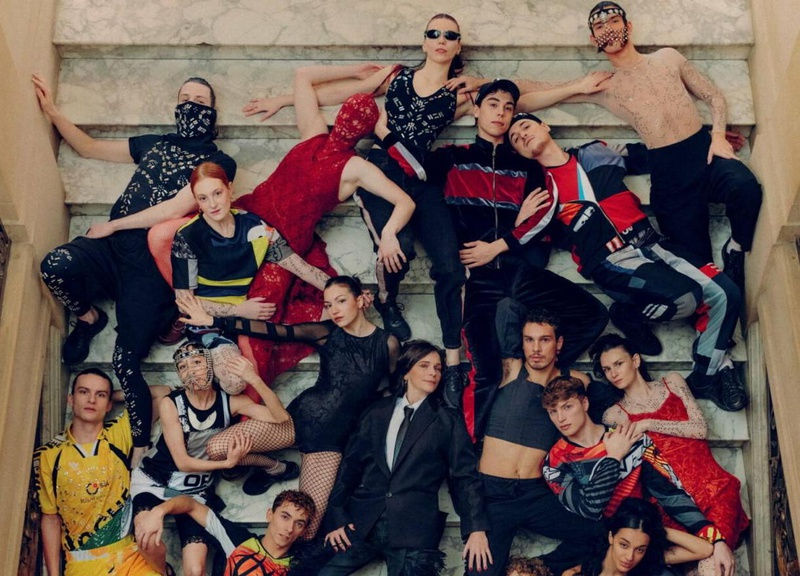
Unity without uniformity. Inspired by the energy of breaking battles, Témoin brings together self-taught artists from a range of marginalised dance movements: b-boying, freestyle, krump, electro and waacking. Incorporating improvised solos and group movements, raw energy and virtuosity, the piece praises the unique while simultaneously celebrating relationships and exalting the collective. Each dancer embodies a generation, a story and a body language to bear witness to the evolution of hip-hop culture.
Set to a 90s rap soundtrack, the choreography ‘is based on the synergy between keen listening and the momentum of interaction,’ explains Saïdo Lehlouh, a major figure on the French hip-hop scene. He continues to develop his work, which pays particular attention to human bonds, as part of the FAIR-E collective which heads up the Centre chorégraphique national de Rennes et de Bretagne.
Running time: approx. 1 hr (no interval)
Children aged 8 and over -
Hip Hop Games : les 15 ans
![]()
Main AuditoriumLille Opera
Hip Hop Games : les 15 ans
Finale internationale
Sunday, 13 December 2026 16:00
Main AuditoriumLille Opera
Hip Hop Games est le premier jeu d’improvisation et de création chorégraphique hip hop, créé par Romuald Brizolier. La tournée anniversaire des 15 ans s’achève par une grande finale internationale.
Après une première partie consacrée à l’écriture chorégraphique le samedi 12 décembre au Grand Sud, l’Opéra de Lille accueille le deuxième volet, entièrement dédié à l’improvisation.
Quatre équipes internationales, venues de Côte d’Ivoire, des Pays-Bas, de Belgique et de France, s’affronteront en direct pour tenter de remporter le prestigieux prix Hip Hop Games. Attribué par un jury professionnel, il offrira aux vainqueurs une bourse d’aide à la création de 4 000 €, un accompagnement artistique, ainsi que des opportunités de diffusion.
-
Echos from Exile
![]()
Main AuditoriumLille Opera
Bartók, Chopin, Liszt
Wednesday, 16 December 2026 20:00
Main AuditoriumLille Opera
Béla Bartók’s 1937 Sonata was a watershed moment for the history of music: it was the first composition to place the piano on equal footing with percussion instruments. For the premiere in Basel, Switzerland, the composer and his wife played the piano parts, and their page turner, future maestro Georg Solti, could hardly believe his ears. Not long after, Bartók’s life was upended: for political reasons, he was forced to leave Hungary for the United States. Though he had been celebrated in Europe for his pioneering mind, he struggled to make a name for himself in the US. He died there, ill and penniless, in 1945.
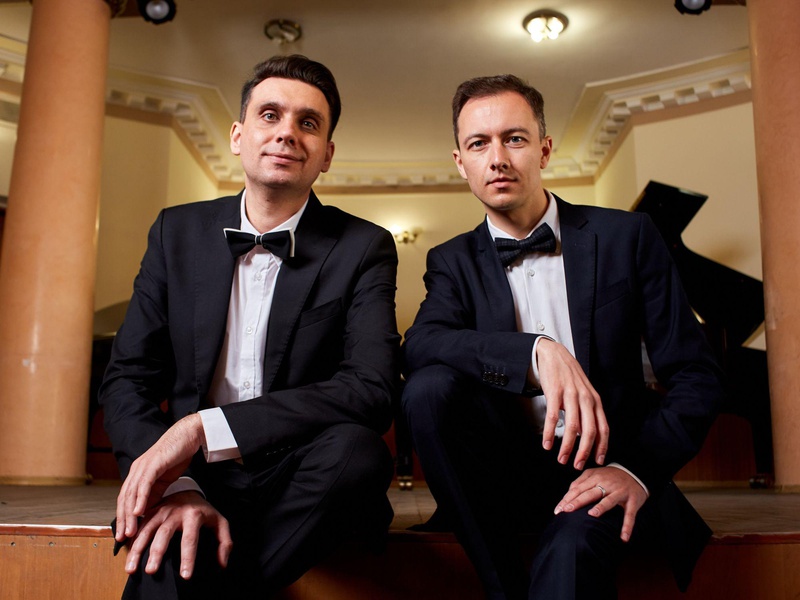
Following the Journey to Ukraine concert and the travelling opera Bluebeard’s Castle from last season, pianists Oleh Kopeliuk and Ihor Sediuk have returned to Lille, Kharkiv’s twin city. Kopeliuk and Sediuk created this programme at a time when their own trajectories had been upended. Bartók is joined by two exiled romantics — Chopin, who was forced from his native Poland, and Liszt, who left Hungary voluntarily — as well as by two major figures of contemporary Ukrainian music: Lyudmyla Shukaylo, who has been in exile in Egypt since the beginning of the war, and Dmytro Malyi. A new composition by Malyi, commissioned by the Opéra de Lille, will premiere during the concert.
Kharkiv Piano Duo
Running time: approx. 2 hr. incl. interval -
Dramatic idyll
![]()
The foyerLille Opera
Marin Marais, Burkhard Stangl
Tuesday, 12 January 2027 13:00
The foyerLille Opera
More than four centuries stand between the emergence of the first violas da gamba and that of the electric guitar. The gap is somewhat narrower between Marin Marais, composer and violist at the court of Louis XIV, and Burkhard Stagl, an Austrian guitarist, composer and improviser of experimental music born in 1960. Stangl has responded to Marais with subtle musical commentaries on his own instrument, driven by the conviction that, had Marais known the elctric guitar, he would probably have embraced its musical possibilities.
The viola da gamba player Eva Reiter and the guitarist Tom Pauwels — two pillars of the Ictus ensemble — bring together works by Marais and the contemporary echoes they have inspired in Stangl. Performing Marais’ works on bothe the viola da gamba and the elctric guitar, they draw a bridge between two distant points on the timeline of music history. Or perhaps they view this timeline as a vast soundscape, where different eras become simultaneously accessible to our contemporary ears. Our conception of time moving in a single direction begins to waver: pathways open up between eras, allowing them to engage in a two-way dialogue. It is a though Stangl were not merely responding to Marais, but that Marais had sent a sonic message into the future, intended for Stangl and today’s listeners.
A paradox that is only on the surface, much like the title of this concert, taken from an opera by Marais, written for Versailles but now lost. In this dramatic idyll to which Reiter au Pauwels, Marais and Stangl invite us, the distinction between what belongs to the past, the present of the future eventually dissolves. Until time itself stands still.
-
MARS
![]()
Main AuditoriumLille Opera
Jennifer Walshe
from Wednesday, 13 January 2027 to Saturday, 16 January 2027
Main AuditoriumLille Opera
When Earth is beyond repair, where will we go to survive? In this lyrical odyssey, four women astronauts set out on a nine-month journey to the planet Mars. Their mission: save humanity. But before they reach their destination, the expedition is taken over by a billionaire tech bro.
With its focus on the quirky details of life in zero gravity and its reflections on the absurdity of space travel, this new opera turns the Martian myth into a humorous meditation on isolation and the quest for meaning. In the ship, where the series Real Housewives is on a constant loop, tensions mount and relationships are tested.
Jenny Walshe is without a doubt one of the most imaginative and least conventional figures of the contemporary opera scene. Her charming language and biting wit have already won over vast audiences. MARS blends music, texts and gestures, as well as NASA recordings, archival images from former space programmes and clips from sci-fi films to create an immersive experience that is both surprising and joyful. A major hit as soon as it premiered, this operatic UFO is now in France for the first time. Get ready for take-off!
Musical director Elaine Kelly
Staging Tom Creed, Jennifer WalsheRunning time: approx. 2 hr. 10 min. incl. interval
Sung in English with French and English surtitles -
Feux cosmiques
![]()
The foyerLille Opera
Scriabine, Messiaen, Crumb, Valckenaers
Thursday, 21 January 2027 18:00
The foyerLille Opera
Alexandre Scriabine aspirait à des expériences extatiques capables de conduire interprètes et auditeurs au-delà de notre monde. Son Mystère, projet d’art total dans l’Himalaya, devait transcender la planète et l’humanité dans un acte de destruction créatrice, mais ne vit jamais le jour. Vers la flamme accomplit cette destruction en miniature, à travers l’évocation d’un feu incessant, symbole à la fois créateur et destructeur. Un même élan vers l’extase traverse sa Sonate pour piano no 5. Catholique fervent, Messiaen puisait dans les rites d’autres cultures des conceptions spirituelles à portée presque universelle. Dans sa virtuose Île de feu, il s’inspire ainsi des rituels magiques du feu en Papouasie–Nouvelle-Guinée. Influencé à son tour par l’astrologie et le mysticisme, le compositeur américain George Crumb explorait les liens entre sons et significations métaphoriques. Ses fantaisies pour piano tirées de Makrokosmos I et II font notamment référence à la symbolique des constellations, tandis que l’amplification et les techniques de jeu expérimentales révèlent des couleurs sonores entièrement nouvelles.
Pièces de Olivier Messiaen, Alexandre Scriabine, Brecht Valckenaers, George Crumb
Brecht Valckenaers piano
Durée : 1h
-
Zodiaque : une odyssée dans les constellations
![]()
The foyerLille Opera
Concert insomniaque - 1ère partie
Saturday, 23 January 2027 21:00
The foyerLille Opera
Concert allongé dans le grand foyer
En écho à l’imaginaire déployé par Jennifer Walshe dans son opéra Mars, ActeSix et son directeur artistique Samuel Hengebaert ont conçu pour cet Insomniaque trois orbites autour de la planète rouge.La nuit commence par une contemplation musicale de la voûte céleste — et rien de mieux, pour cela, que de s’allonger. Si le concert avait lieu en plein air, on pourrait apercevoir au-dessus de Lille le Bélier et les Gémeaux. Le compositeur Karlheinz Stockhausen a brossé le portrait des douze signes du zodiaque dans son cycle Tierkreis. Ces douze pièces de caractère forment la colonne vertébrale du premier concert. Conçues à l’origine pour des boîtes à musique, elles peuvent être jouées ad libitum par différents instruments. Entre les constellations, ActeSix fait surgir, tels des météorites, des fragments de musique venus de différentes époques, de Biber à Penderecki et Sofia Goubaïdoulina. Comme autant de réponses humaines à notre fascination pour le ciel.
Karlheinz Stockhausen Tierkreis (1974-75),
entrelacé de douze répons anciens, modernes et contemporains de Heinrich Biber (1644-1704), Krzysztof Penderecki (1933-2020) et Sofia Goubaïdoulina (1931-2025), entre autresAvec le collectif ActeSix
Lucile Richardot mezzo-sopranoDurée : 1h
-
Folk songs : une mémoire de la Terre
![]()
The foyerLille Opera
Concert insomniaque - 2nde partie
Saturday, 23 January 2027 22:30
The foyerLille Opera
Concert allongé dans le grand foyer
En écho à l’imaginaire déployé par Jennifer Walshe dans son opéra Mars, ActeSix et son directeur artistique Samuel Hengebaert ont conçu pour cet Insomniaque trois orbites autour de la planète rouge.Dans le deuxième concert de la soirée, ActeSix pose cette question : que resterait-il de nos musiques si nous devions quitter la Terre ? Autour des Folk Songs de Luciano Berio et de la figure de Cathy Berberian, l’ensemble imagine une sorte de capsule musicale : langues, mélodies, danses et traditions transmises d’une génération à l’autre, transformées par le voyage et la mémoire.
Luciano Berio Folk Songs (extraits, 1964), et des chants, danses et musiques populaires de la Renaissance et du 17e siècle
Avec le collectif ActeSix
Lucile Richardot mezzo-soprano
Hélène Desaint alto
Alexis Derouin violoncelle
Corentin Garac flûte
Josèphe Cottet violon baroque
Julie Dessaint viole de gambe
Eloy Orzaiz orgue positif
Clara Izambert-Jarry harpeDurée : 1h
-
Loop : un voyage hors du temps
![]()
The foyerLille Opera
Concert insomniaque - 3ème partie
Saturday, 23 January 2027 23:59
The foyerLille Opera
Concert allongé dans le grand foyer
En écho à l’imaginaire déployé par Jennifer Walshe dans son opéra Mars, ActeSix et son directeur artistique Samuel Hengebaert ont conçu pour cet Insomniaque trois orbites autour de la planète rouge.Le troisième concert de la soirée explore notre perception du temps jusqu’à son dérèglement, à travers des musiques répétitives allant des premiers ostinatos baroques aux œuvres de Philip Glass et Julius Eastman. Aux pulsations sonores acoustiques viennent se mêler des loops électroniques. Cette attention renouvelée à l’écoute est placée sous le signe de Pauline Oliveros, pionnière de la musique électronique, dont la pratique du Deep Listening nous invite à ne plus seulement regarder l’espace, mais à tenter de l’écouter.
Musiques répétitives anciennes et contemporaines, acoustiques et électroniques :
œuvres et fragments de Philip Glass (né en 1937), Julius Eastman (1940-1990) et Pauline Oliveros (1932-2016)Avec le collectif ActeSix
Lucile Richardot mezzo-soprano
Hélène Desaint alto
Alexis Derouin violoncelle
Corentin Garac flûte
Josèphe Cottet violon baroque
Julie Dessaint viole de gambe
Eloy Orzaiz orgue positif
Clara Izambert-Jarry harpeDurée : 1h
-
The Hunger
![]()
Main AuditoriumLille Opera
Constanza Macras / Dorky Park
from Friday, 29 January 2027 to Saturday, 30 January 2027
Main AuditoriumLille Opera
What if our hunger, even in the face of abundance, turned into a greed that absorbed everything in its path? In 1515, European colonisers arrived in the Río de la Plata region in South America. As soon as the crew set foot ashore, they were massacred by the natives. A single cabin boy escaped their wrath: they took him in and returned him to the Spanish ten years later. Inspired by this historical anecdote, Argentine novelist Juan José Saer wrote The Witness, which tells the tale of a sailor who lives alongside a tribe of cannibals who upend his world-view. Working from the novel, Constanza Macras explores the phenomenon of superabundance.
The choreographer from Buenos Aires has created an on-stage whirlwind where dance, theatre, music and video are interwoven to probe the insatiable egos of a capitalist society that believes any empty space must be filled. Cannibalistic imagery finds an echo in new types of greed like frenzied consumerism and the glut of content on social media. The performers on stage alternate between tribal and contemporary interpretations with an exuberant energy that reflects our voracious present, which nothing can stop — not even its own devouring.
In German and English with French and English surtitles
Running time: approx. 2 hr. (no interval) -
Concerto Danzante
![]()
Grande SalleConcertgebouw - Bruges
Au Concertgebouw de Bruges
Thursday, 4 February 2027 20:00
Grande SalleConcertgebouw - Bruges
Traversons la frontière pour prolonger la découverte chez nos partenaires belges !
« Un dialogue captivant entre la danse contemporaine et la musique baroque interprétée en direct. »
Concerto Danzante est un voyage chorégraphique à travers l’histoire du concerto. Josépha Madoki, icône du whacking — danse urbaine née au sein de la communauté LGBT de Los Angeles dans les années 1970 —, et la chorégraphe Maud Le Pladec créent un programme double pour les 26 danseurs du Ballet de Lorraine.
Maud Le Pladec transpose la tension, le dialogue et la virtuosité des concertos de Bach dans un langage de danse abstrait et poétique. Avec son écriture résolument expressive, Josépha Madoki opte pour une interprétation audacieuse et moderne des concertos de Vivaldi.
Création Les Arts Florissants, CCN – Ballet de Lorraine
Direction musicale et violon Théotime Langlois de Swarte
Chorégraphie Josépha Madoki, Maud Le PladecUne navette gratuite est proposée au départ de Lille.
sur réservation auprès de la billetterie de l'Opéra
durée : 2h -
María de Buenos Aires
![]()
Main AuditoriumLille Opera
Astor Piazzolla
from Thursday, 11 March 2027 to Saturday, 20 March 2027
Main AuditoriumLille Opera
María is born ‘one day when God was drunk’ in a poor suburb of Buenos Aires. Drawn by the city lights, she leads a tumultuous life in the rough parts of the capital. She eventually becomes a cabaret singer, enjoying success and men’s affections, until she’s rejected and marginalised once again. After her brutal death, she wanders the streets like a shadow, with no memory of her own past. Until one day she miraculously becomes pregnant…
Astor Piazzola, the unrivalled master of the bandoneon, breathed new life into Argentine tango in the 1960s by incorporating new rhythms and instruments. His sole opera is a manifesto for this tango nuevo, steeped in jazz and European classical music.
Giulia Giammona is an emerging figure in European musical theatre. Over the course of her career so far she has rediscovered surrealist women authors and explored feminist perspectives on mythology. Eschewing old-fashioned stereotypes, Giammona has cast women in all of the roles. She aims to restore the heroine’s story to her, to question the gendered codes of tango, and to condemn the social mechanisms that lead to the idealisation of women’s bodies and to sexist and sexual violence.
Musical director Nicolas Agullo
Staging Giulia GiammonaSung and spoken in Spanish and French with French and English surtitles
Running time: approx. 1 hr. 45 min. (no interval) -
At the Heart of Darkness
![]()
Main AuditoriumLille Opera
Le Concert d’Astrée, Emmanuelle Haïm
Thursday, 25 March 2027 20:00
Main AuditoriumLille Opera
The Leçons de ténèbres by François Couperin draw audiences into a musical world of intense intimacy and depth. Composed for the Holy Week liturgy, they are some of the most striking works of baroque vocal music ever written. In them, Couperin sets to music texts taken from the Book of Lamentations that are generally sung during the evening Tenebrae service, where candles are extinguished one by one until the space is plunged into total darkness — a ritual that makes palpable the experience of loss, abandonment and remembrance. Couperin turns this liturgical tradition into an exceptionally powerful piece of music by alternating between meditative silence and moments of remarkable expressiveness.
With just one or two voices and basso continuo, Couperin creates a finely wrought world whose simplicity only amplifies its radiance. Here the Passion of the Christ isn’t recounted like a distant tragedy; instead it becomes an audible inner state: a lamentation, a memory, a fragile bit of hope in the darkness. This score of rare depth will be performed by Le Concert d’Astrée with Emmanuelle Haïm at the organ.
François Couperin Leçons de ténèbres I-III (1714)
Marc-Antoine Charpentier Repons (end of 17th c.)Emmanuelle Haïm organ
Le Concert d’Astrée instrumental ensembleRunning time: approx. 1 hr. 10 min. (no interval)
-
Otello
![]()
Main AuditoriumLille Opera
Otello
Giuseppe Verdi
from Monday, 10 May 2027 to Thursday, 3 June 2027
Main AuditoriumLille Opera
Otello has conquered everything: military honours and Desdemona’s heart. Glowing with success, he arrives in Cyprus to assert the authority of the City of the Doges. But the rise of the African general fuels Iago’s racist contempt. Frustrated by his subordinate position, the lieutenant takes revenge on Otello by targeting his Achilles’ heel: the absolute love he bears for his wife. When Iago casts doubt on Desdemona’s fidelity, a cynical chain reaction is set in motion. Gradually, the admired man becomes the prisoner of a jealousy he can no longer control.
Alongside Aida and Falstaff, Otello is considered the pinnacle of Italian opera. In it, Verdi unfolds a true musical dramaturgy: beneath the sung words, the orchestra reveals the inner turmoil and conflicting forces that consume the protagonists.
In his productions, Árpád Schilling has spent the past two decades examining the social upheavals of our time, particularly the dynamics of radicalisation in Europe. He presents Otello as the tragedy of a love destroyed by discrimination. The stigmatising gaze cast upon the one perceived as a stranger unleashes such violence that the man ultimately becomes the monster projected onto him by society.
Musical director Dmitry Matvienko
Staging Árpád SchillingSung in Italian, with French and English surtitles
Running time: approx. 2 hr 40 min (including interval)Product not currently on sale
-
From Mantua to Venice
![]()
Main AuditoriumLille Opera
Ensemble Diderot
Friday, 21 May 2027 20:00
Main AuditoriumLille Opera
It all began in Mantua, an elegant city in northern Italy where virtuoso violinist and visionary composer Salomone Rossi created a new kind of instrumental music in the early seventeenth century. At the crossroads of the Renaissance and baroque periods, his works created a new space for expressiveness, laying the foundations for the trio sonata, which is written for three melodic parts.
Between Mantua and magnificent Venice, artistic paths crossed frequently. Musicians, styles and ideas circulated, nourishing an unprecedented period of creative effervescence. In the free, cosmopolitan La Serenissima, the new art developed rapidly. There the sonata concertata in stil moderno reached its height: two violins and basso continuo converse in a subtle game of contrasts, clarity and elegance. The music becomes theatre, a true instrumental play, a wordless madrigal where each part comes to life and burns brightly.
From the founding innovations of Rossi and Castello to the refinements of Marini, Fontana, Rovetta, Uccellini, Cavalli, Legrenzi and the brilliance of Vivaldi, this programme retraces the metamorphosis of a new musical language.
Ensemble Diderot
Running time: approx. 1 hr. 20 min. (no interval)
-
Cinq jours au soleil
![]()
Main AuditoriumLille Opera
Emanuel Gat
from Thursday, 10 June 2027 to Saturday, 12 June 2027
Main AuditoriumLille Opera
‘Cinq jours au soleil’ [Five Days in the Sun] sounds like a seaside escape, an enchanted getaway, or maybe even a honeymoon. While the poetic title of Emanuel Gat’s newest creation remains enigmatic, its soundtrack is instantly recognisable. Gustav Mahler’s Symphony No. 5 is a monumental piece of orchestral music, and the film Death in Venice by Visconti made its Adagietto a household melody. Mahler composed it during a period of creative renewal, after recovering from a life-threatening haemorrhage and meeting the fascinating Alma Schindler, who would soon become his wife.
As in his other creations, Emanuel Gat establishes an intimate dialogue between dance and music that goes far beyond simple illustration. He has imagined five tableaus — one for each of the symphony’s five movements — that open five choreographic doors to an emotional journey into the heart of the human experience. Like Mahler himself in 1901, the piece moves from darkness into light, from despair to joy, and from tension to ease. It also provides ample evidence of our ability to transcend crises by looking at life from different perspectives.
Running time: approx. 1 hr. 15 min. (no interval)





Your shopping cart
Your shopping cart
Your shopping cart
Limited Access
Limited Access
Limited Access
Other users are currently waiting to access the shop. Make sure to complete your purchase in the next or you risk losing your order and being redirected back in the queue. You have to complete your order.